

Einführung
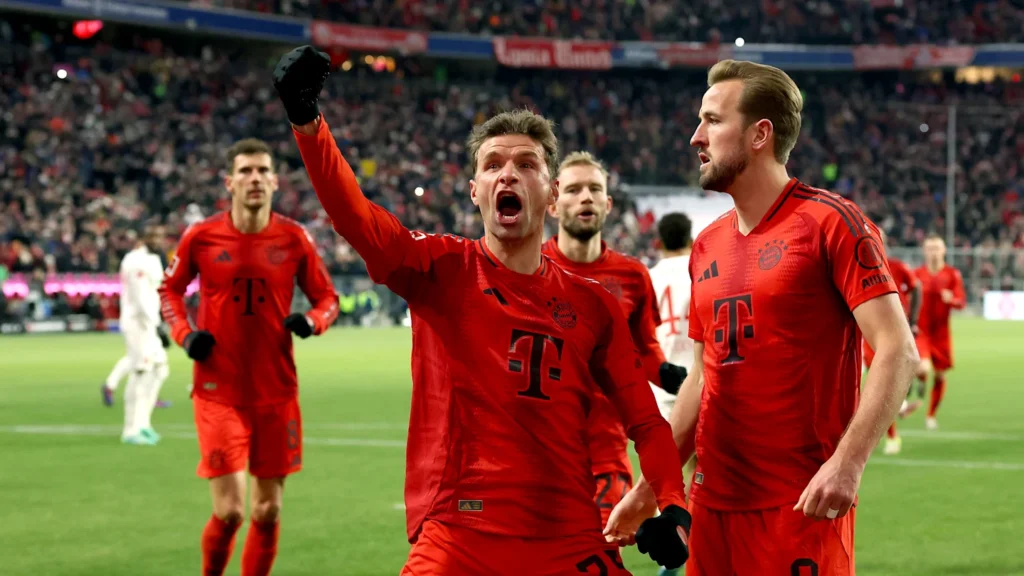
Am 22. Januar 2025 lieferten sich Feyenoord Rotterdam und FC Bayern München in der Gruppenphase der UEFA Champions League ein spannungsreiches Aufeinandertreffen im ehrwürdigen „De Kuip“ von Rotterdam. Während die Bayern mit starker Offensivpower dominierten, überraschte Feyenoord mit Effektivität, Kampfgeist und schnellen Kontern. Das Ergebnis: ein eindrucksvoller 3:0‑Heimsieg für die Niederländer, mit zwei Toren von Santiago Giménez und einem späten Knaller von Ayase Ueda. Doch hinter den Aufstellungen, den Techniken und den Spielern verbirgt sich eine Geschichte von Leidenschaft, Strategie und Bedeutung – sowohl für den Moment als auch für die beteiligten Klubs.
Schnell‑Match‑Übersicht
| Merkmal | Detail |
|---|---|
| Datum | 22. Januar 2025 |
| Wettbewerb | UEFA Champions League, Gruppenphase (Matchday 7) |
| Ort | De Kuip, Rotterdam, Niederlande |
| Ergebnis | Feyenoord 3 – 0 Bayern München |
| Torschützen | Santiago Giménez (21′, 45’+9′, Penalty), Ayase Ueda (89′) |
| Feyenoord-Aufstellung (Start) | Bijlow – Smal, Trauner, Hancko, Beelen – Stengs, Beelen, Milambo – Moussa, Paixão, Giménez |
| Bayern-Aufstellung (Start) | Neuer – Davies, Upamecano, Min‑Jae Kim, Laimer – Kimmich, Goretzka – Sané, Musiala, Olise – Kane |
| Trainer Feyenoord | Brian Priske |
| Trainer Bayern | Vincent Kompany |
| Besonderheiten | Rauchentwicklung im Stadion nach Flares verzögert den Spielstart |
Narrativ & Analyse (auf Englisch)
Background and Stakes
In a high-stakes Champions League clash, Feyenoord and Bayern Munich brought contrasting narratives to the pitch at De Kuip. While Bayern, under the management of Vincent Kompany, sought dominance and qualification for the knockout stage, Feyenoord were hungry to prove themselves on European soil. The Rotterdam faithful, known for their passionate support and intimidating stadium atmosphere, added an extra layer of drama to the night.
The Unexpected Opening
The match started with turbulence—literally. Pyrotechnics and smoke from flares set off by some Feyenoord supporters forced the referee to halt the game shortly after kickoff due to poor visibility. The delay only amplified the intensity in the stadium, and once play resumed, Feyenoord swiftly imposed themselves.
ruthless counter‑attacking and clinical finishing
Despite owning less possession than Bayern, Feyenoord made their opportunities count. In the 21st minute, a well-timed pass from Gijs Smal found Santiago Giménez, who calmly slotted the ball past Manuel Neuer. It was a moment that combined precision with audacity. Later, in stoppage time of the first half, Feyenoord were awarded a penalty after a foul on Calvin Stengs; Giménez confidently converted it, bringing the halftime score to 2–0.
Bayern dominated the ball, but Feyenoord’s defense held firm and their goalkeeper made key saves to repel wave after wave of attacks. The German side’s attempts came in numbers, but they lacked the finishing touch.
Sealing the Victory
As Bayern pushed forward in search of a goal, Feyenoord remained disciplined. Their third came late in the game: a lightning-fast break, orchestrated by Antoni Milambo, released Ayase Ueda, who finished with precision in the 89th minute. It was a blow for Bayern and a moment of sheer triumph for the hosts.
Tactical Mastery and Mental Strength
Feyenoord’s approach was bold yet pragmatic. Their coach, Brian Priske, built a tactical framework that blended compact defending with swift transitions. The back four remained cohesive, midfielders tracked back diligently, and the front line punished Bayern’s occasional defensive optimism.
On Bayern’s side, the selection showed intent: big names like Neuer, Kimmich, Musiala, and Kane were all in the starting XI, but defensive frailties and lapses in concentration proved costly. Vincent Kompany, in his post-match assessment, pointed out that the defensive breakdowns were collective failures—reiterating that defending is not just the back line’s job.
Turning Points & Key Moments
-
Flares and Smoke Delay: The early disruption may have unsettled the Bayern side, but it fuelled the Feyenoord crowd.
-
Giménez’s Brilliance: His opening goal and composed penalty were decisive.
-
Bijlow’s Goalkeeping: The Feyenoord keeper made multiple vital saves, denying Kane and Musiala among others.
-
Ueda’s Seal: The late strike encapsulated Feyenoord’s opportunism and composure under pressure.
Significance of the Result
This 3–0 victory was more than just three points—it shifted the momentum of Feyenoord’s European campaign. According to data analysts, Bayern attempted a staggering number of shots, but Feyenoord’s efficiency and bijlow’s form made the difference. For Bayern, the loss raised serious questions about their defensive solidity and their ability to convert dominance into goals.
Public Perception & Aftermath
Feyenoord’s triumph reverberated across Europe. Many praised their tactical discipline, mental toughness, and the brilliance of Giménez and Ueda. The Dutch side’s fans reveled in a statement win at home.
On Bayern’s side, the mood was more critical. Kompany faced scrutiny for his defensive choices, while pundits questioned the team’s inability to break down a resilient Feyenoord defense. The loss put additional pressure on Bayern to perform in their next matches if they wished to salvage their Champions League campaign.
Legacy of the Match
This clash will be remembered as one where underdog met giant—and won on strategy, spirit, and surgical execution. For Feyenoord, it reinforced their European ambitions and their identity as a club that thrives in front of its home crowd. For Bayern, it was a reminder that on any given night in the Champions League, no match is won on reputation alone.
5–7 Häufig gestellte Fragen (FAQs auf Deutsch)
-
Warum war das Spiel zwischen Feyenoord und Bayern am 22. Januar 2025 besonders bedeutsam?
-
Es war ein Champions-League-Gruppenphasenmatch mit hoher Bedeutung: Bayern war stark favorisiert, aber Feyenoord zeigte große taktische Qualität und gewann mit 3:0.
-
-
Welche Spieler erzielten die Tore für Feyenoord?
-
Santiago Giménez traf zweimal (ein reguläres Tor und einen Strafstoß), und Ayase Ueda sorgte in der 89. Minute für den dritten Treffer.
-
-
Wie konnte Feyenoord mit so wenig Ballbesitz trotzdem so effektiv sein?
-
Durch clevere Konter, präzises Passspiel und diszipliniertes Defensivverhalten nutzte Feyenoord die wenigen Chancen maximal aus.
-
-
Welche taktische Aufstellung wählte Bayern München?
-
Bayern startete mutig mit einem 4-2-3-1‑System: Neuer im Tor; Davies, Upamecano, Min-Jae Kim, Laimer in der Verteidigung; Kimmich und Goretzka im Mittelfeld; Sané, Musiala und Olise offensiv hinter Stürmer Kane.
-
-
Gab es eine Kontroverse oder besondere Vorfälle im Spiel?
-
Ja: Kurz nach Anstoß setzte Feyenoord-Anhänger Pyrotechnik ein, was zu dichter Rauchentwicklung führte und den Spielbeginn verzögerte.
-
-
Wie reagierte Vincent Kompany nach der Niederlage?
-
Er übernahm teilweise Verantwortung, betonte jedoch, dass die Abwehrprobleme eine kollektive Angelegenheit seien.
-
-
Welche Bedeutung hat dieser Sieg für die Zukunft von Feyenoord in der Champions League?
-
Der Sieg stärkt Feyenoords Selbstvertrauen, zeigt ihre taktische Reife und gibt ihnen echten Aufwind für den weiteren Verlauf der Gruppenphase.
-